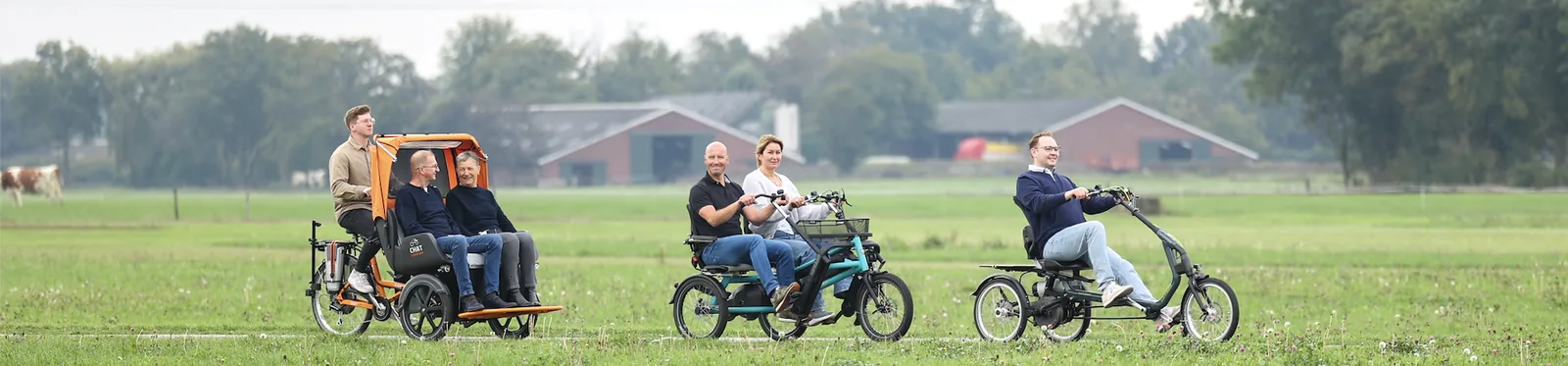
Varsseveld, Netherlands. In both Germany and the Netherlands, cycling is much more than just a means of transport; it is a way of life, offering freedom and flexibility, and promoting independence, health and social participation. However, the populations of both countries are ageing rapidly. Studies show that one in four people in the EU are affected by some form of mobility limitation (Council of the European Union, 2026, Disability in the EU: Facts and Figures). Consequently, millions of people are gradually being forced to give up cycling. This loss of mobility can lead to social isolation, reduced independence, and declining mental well-being. Although conventional bike-sharing schemes have expanded rapidly, they predominantly cater for young, urban adults, leaving adapted vehicles such as side-by-side bicycles, rickshaws and tricycles largely inaccessible. The high cost of these vehicles, combined with limited storage options, can create significant barriers to accessing adapted mobility for those who need it most.
The newly launched FITS (Facilitating Inclusive Transportation Solutions) project aims to break down these barriers and prove that everyone, regardless of age or physical ability, has a fundamental right to mobility. The initiative, which started on 15 May 2026 and will run for more than three years, will develop and deploy shared mobility systems specifically designed for adapted bicycles. FITS is funded by the Interreg VI A Deutschland-Nederland programme, which has provided a total budget of €3,513,760.88.
A cross-border partnership for inclusive mobility
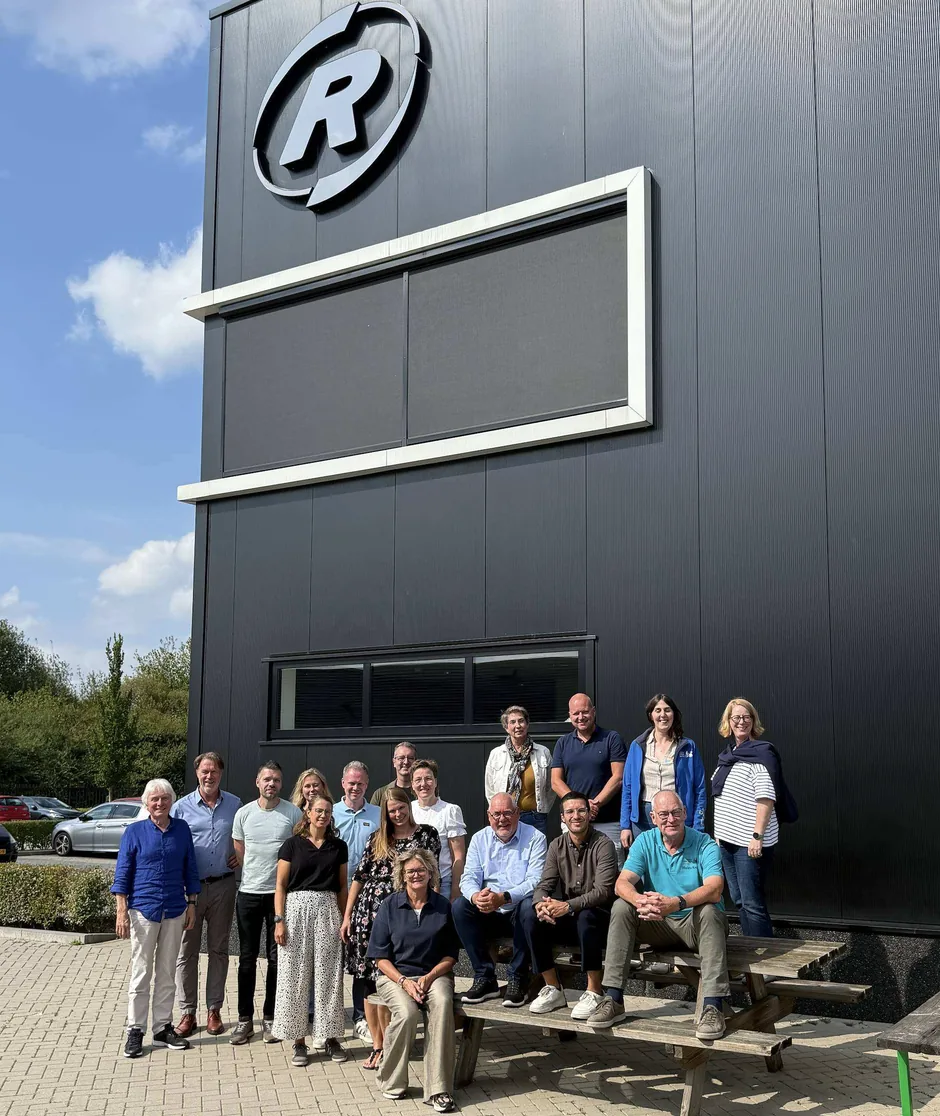
Led by lead partner vanRaam, a renowned Dutch manufacturer of adapted bicycles, the FITS project brings together a unique collaborative consortium of eight core partner organisations from both sides of the border:
- vanRaam (manufacturer of adapted bicycles, NL)
- BeeManaged (IT company, NL)
- Provincie Overijssel (public authority, NL)
- Landkreis Vechta (public authority, DE)
- Stichting Fietsmaatjes Brabant (cycling volunteer organisation, NL)
- Radeln ohne Alter Deutschland (cycling volunteer organisation, DE)
- PflegeButler Häusliche Pflege mit Stil (elderly care home, DE)
- FH Münster (university of applied sciences, DE)
This core partnership is supported by thirteen associated partners who represent cycling, social inclusion, and community interests at regional and international levels. Key associated partners include the European Cyclists' Federation (ECF), the Dutch Cycling Embassy, Fietsersbond, Nationale Vereniging de Zonnebloem, cargobike.jetzt GmbH, nextbike GmbH, Zukunft Fahrrad e.V., and the Dutch Ministerie van Infrastructuur en Waterstaat. Together, this cross-border network aims to make cycling more inclusive and enable older adults and people with reduced mobility to remain active, independent, and socially connected.
How will FITS achieve this?
The partners will co-design and develop three sharing models across the border region to make adapted bicycles easier to access as part of everyday shared mobility.
01
Access single-person adapted vehicles
Designed for individuals who wish to ride, for example a tricycle, independently.
02
Access multiple-person adapted vehicles to use with a social network
This allows users to access multiple-person adapted vehicles (like side-by-side bicycles or rickshaws) to ride with their own family, friends, or trusted contacts.
03
Access multiple-person adapted vehicles to drive (un)familiar individuals, through volunteering and matchmaking
This service connects volunteer riders with people that need a ride through a structured matchmaking process, enabling shared outdoor trips for those without an immediate companion.
Designed with the end-users, for the end-users
Rather than developing solutions in isolation, FITS puts users at the heart of its mission. Through co-creative design workshops, seniors and people with reduced mobility will work directly with all project partners to develop and test the FITS services. By listening to real-world experiences, vanRaam will improve the durability, robustness and safety of their adapted vehicles. The tech partner BeeManaged is developing a customised, highly accessible booking and management platform. The platform will be available in both German and Dutch and will feature an interactive map showing the locations of available adapted bicycles throughout the programme area. This will make it easy for the users to locate and book the vehicles via the app.
Creating a lasting policy and social impact
Beyond the pilot phase, the aim of the FITS project is to establish a long-term legacy in inclusive mobility. FITS will deliver a solution that can be used across European cities and regions. By the time the project concludes in 2029, the consortium will have delivered a comprehensive toolkit and targeted policy recommendations to support municipalities, elderly home centres and transport planning authorities to implement shared adapted bicycle services. FH Münster will evaluate the project's social, health and psychological impacts, paving the way for the integration of shared adapted bicycles into regional mobility concepts and the securing of long-term public funding.
By combining innovative services, accessible digital technology, user-centred co-creation and cross-border collaboration, FITS will demonstrate the social value of inclusive transport and ensure everyone has the right to move freely.
Cofinanced by
Press release issued by the FITS consortium, republished by BeeManaged as a project partner.